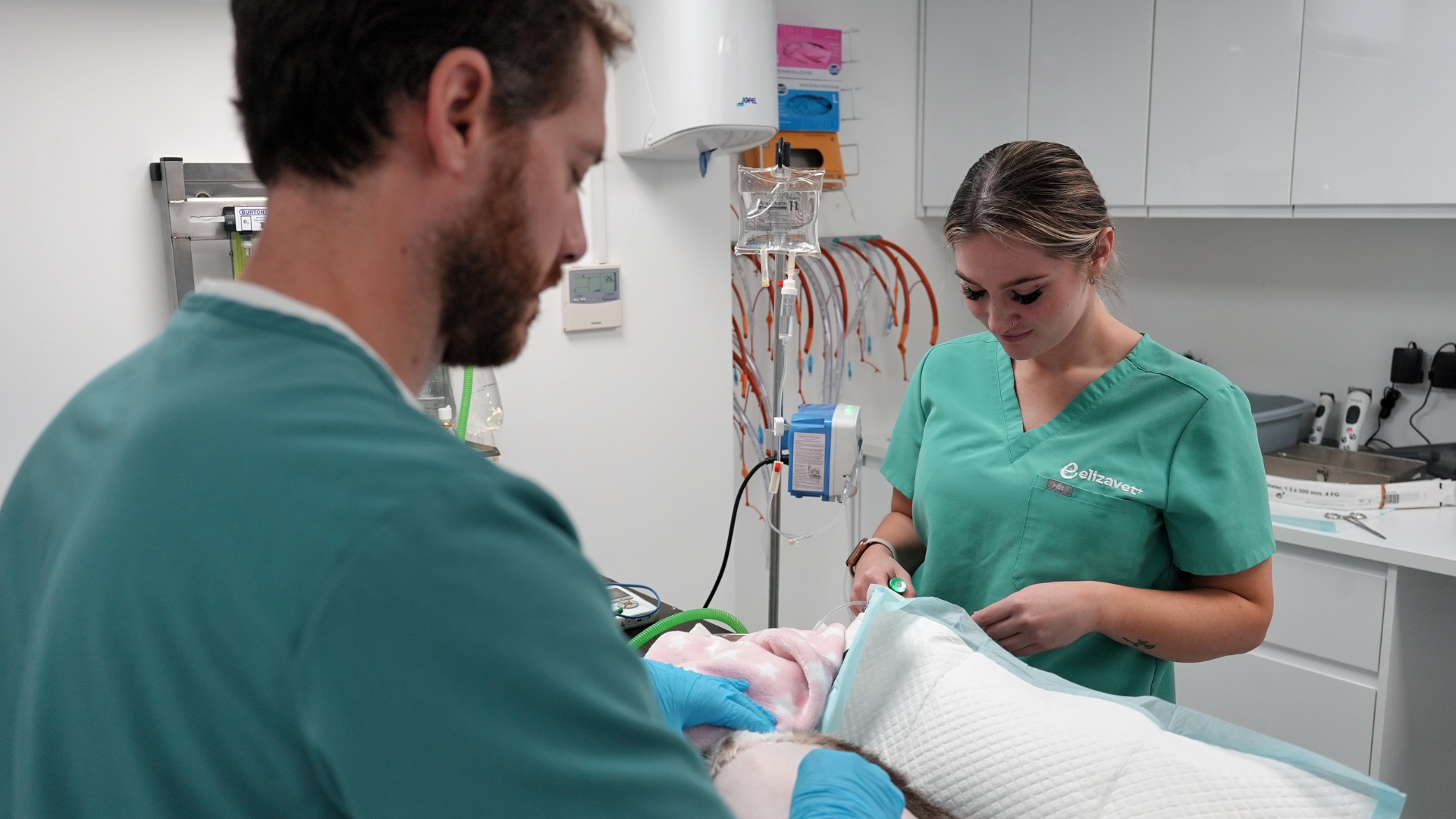
Spinal Fracture Stabilisation in Dogs and Cats
Compassionate spinal care at Elizavet is all about precision, safety and a speedy recovery. When a dog or cat suffers a spinal fracture or dislocation, urgent and precise treatment is clearly vital. Spine stabilisation restores structure, protects the spinal cord, and gives your pet a good chance of regaining mobility and comfort.
We welcome spinal care and stabilisation referrals from pet owners and first opinion vet practices in Camden, Maida Vale and the surrounding areas of North London and beyond. Our experienced surgeons carefully plan and manage the surgery and physiotherapy to maximise the chances of affected pets regaining comfortable mobility and going on to have a good quality of life. You can read more about what we have to offer below. If you need more information, please contact us to speak to one of our veterinary surgeons, otherwise …
Elizavet’s Guide to Spinal Fracture Stabilisation in Dogs and Cats
Every spinal injury is unique, and treatment is tailored to each patient. Spine stabilisation may involve the use of specialised implants and materials designed to restore alignment and protect the spinal cord.
Techniques include:
• Locking plates and screws – to fix and realign fractured vertebrae
• Pins or screws combined with bone cement (PMMA) – used when extra strength or reinforcement is needed
• Pedicle screw–rod systems – for strong, load-sharing fixation in larger or more mobile spinal regions
To achieve the highest precision, we use CT-guided planning and 3D-printed surgical guides to position screws and pins exactly where they should be. This technology improves accuracy and reduces the risk of complications such as canal breach or nerve injury.
These techniques are used throughout the spine, including:
• C1–C2 (neck region)
• Thoracolumbar and lumbar vertebrae
• L6–S1 (lower back / lumbosacral junction)
At Elizavet, we use high-resolution CT scans to assess spinal trauma and plan surgery. CT provides excellent bone detail, making it ideal for detecting fractures, luxations, and vertebral malformations, as well as for guiding 3D surgical planning. MRI (Magnetic Resonance Imaging) is preferred for evaluating the spinal cord, intervertebral discs, and soft-tissue injuries.
As part of our comprehensive spinal care, cases requiring MRI are referred to one of our trusted centres before treatment or surgery. This ensures every patient receives the most appropriate diagnostic imaging for their condition, we never compromise on safety or accuracy. After MRI evaluation, we coordinate directly with the referral team to continue treatment or surgical stabilisation where appropriate.
As with all major spinal surgeries, there are potential risks, including:
• Infection or delayed wound healing
• Implant movement or loosening
• Limited neurological recovery (depending on the severity of spinal cord damage)
• Implant or cement failure in high-load areas
Final outcomes depend on several factors, such as the degree of neurological function before surgery, the timing of the operation, the precision of stabilisation, and the quality of postoperative care and rehabilitation. With careful surgical planning and structured aftercare, many pets experience significant improvement in mobility and comfort, although full recovery varies by case.
After spinal surgery, your pet will stay with us for at least 24 hours for close monitoring, pain management, and neurological observation. Once stable, a structured physiotherapy and rehabilitation programme begins to support muscle strength, improve coordination, and restore posture. These exercises help prevent muscle wasting, maintain joint flexibility, and promote a gradual return to normal movement. Physiotherapy and ongoing monitoring are vital parts of recovery and play a major role in long-term spinal care.
With proper planning, surgery, and physiotherapy, many pets regain comfortable mobility and a good quality of life. In more severe cases, spinal stabilisation can help prevent further deterioration and improve comfort. Recovery outcomes depend largely on pre-surgery neurological status and the extent of the spinal injury. Our team will always discuss realistic expectations, risks, and potential outcomes in detail before proceeding.
Why choose Elizavet for spinal care and stabilisation
- CT-guided spinal surgery with advanced 3D guide systems
- Customised implant techniques for complex vertebral injuries
- Referral MRI coordination for comprehensive neurological assessment
- Experienced orthopaedic and surgical team
- Comprehensive rehabilitation and physiotherapy support
- Compassionate, transparent communication at every stage
At Elizavet, we combine technology with compassion, ensuring your pet receives precise, safe, and tailored spinal care from start to finish.
If you need more information, please contact us to speak to one of our veterinary surgeons, otherwise …